After a turbulent year that frayed relations between the city and the Austin Firefighters’ Association, the union says the relationship is starting to mend.
Prolonged contract negotiations, threats to a long-standing staffing model and disputes over management decisions during the Independence Day floods fueled the conflict. A $63 million contract approved late last year has helped rebuild trust.
“Through that darkest hour, did come the dawn,” said David Girouard, an Austin Fire Department battalion chief and the new AFA president.
Girouard stepped into the new role just weeks after the contract was finalized, succeeding Bob Nicks, a veteran Austin firefighter who held the position for 17 years.
“Bob Nicks was remarkable,” Girouard said. Among other things, Nicks helped build new fire stations, codify a staffing model and improve pay and benefits during his tenure.
“I don’t know that I can think of much that hasn’t been born out of the labor of Bob,” Girouard said. “How do you replace someone who is irreplaceable?”
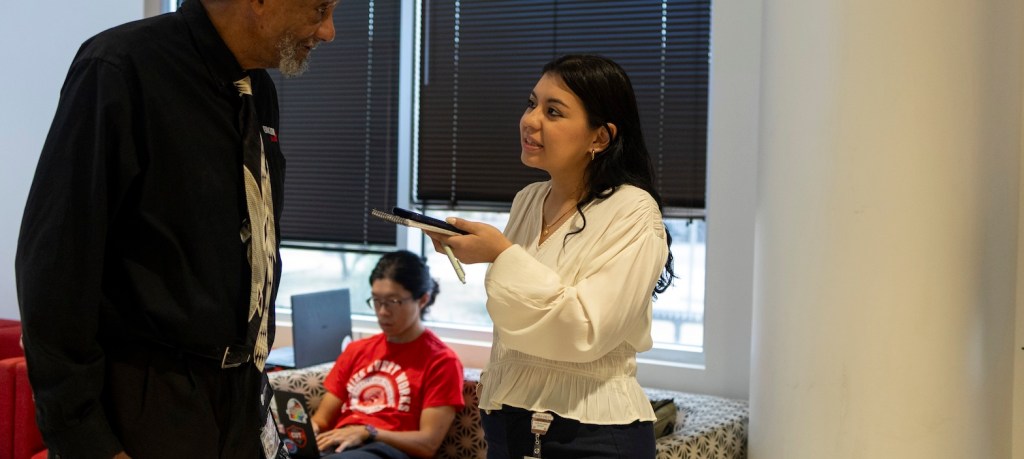
Girouard sat down with Austin Current to explain how he plans to try.
What does the Austin Firefighters Association do, and why does it matter?
The Austin Firefighters Association represents 1,200 professional firefighters, roughly 99% of all Austin firefighters, who serve Austinites 24 hours a day, seven days a week.
It’s important because it’s our role and responsibility to ensure that our firefighters are well-resourced, well-trained, have good working conditions and are put in the best position to serve the citizens of Austin.
We want the most-qualified, the most-trained, the happiest, the healthiest, and the best-resourced firefighters, so they can continue to serve the community with excellence and compassion.
Why did you decide to take on the role of president, and what do you bring to the position?
I have a three-decade career in the Austin Fire Department; about half of that time I’ve served as a chief officer. I’ve worked in many capacities, with many high-functioning teams, and I have had considerable overlap with the association throughout my career.
Around 20 years ago, I served as a vice president for a term, and I’ve served on two different contract negotiating teams for the firefighters’ association.
It’s been about six weeks since taking over. I don’t even know what day of the week it is today. The days are long, and it’s a demanding position, but one I’m humbled to serve in. We’re working hard to get it figured out.
What are your priorities as president?
There are three overarching external goals. Firstly, to support the safety and well-being of our firefighters and their families. The second is to have strong relationships and to work collaboratively with the city to solve complex problems with lasting results. And the third is to continue to earn the trust of the citizens we serve.
At present, the No. 1 internal membership-approved priority for 2026 is to improve labor-management relationships at all levels of local government. I believe that trust has to be built over time by continuing to stack collaboration successes. Eventually, we will strengthen relationships and build trust.
There are commitments to funding for the fire department the city has not yet identified within its budget. We are asking that it start to identify those funds. We know as we get later in the fiscal year, we want to avoid a situation where the city finds itself potentially not meeting some of its contractual obligations.
Make no mistake about it, we’re paying attention.
Is the union satisfied with the new contract?
Ultimately, we were able to secure a four-year labor agreement with the city that really resolved almost all areas causing tension. It helped reestablish a healthy relationship with the city and firefighters.
Firefighting has become more arduous in Austin compared to 30 years ago. Through the labor agreement, the Austin Fire Department will be transitioning to a new schedule: a unique schedule that increases recovery time between shifts. In order to transition to that, we have to hire more firefighters to accommodate the same level of response. The contract that we’ve entered into with the city accomplishes that. There’s a tall task to onboard, recruit, hire and train, but there’s a commitment from the city to move in that direction.
The new labor agreement maintains the four-person staffing model. It’s unsafe to do a four-person job with three people. And so what’s safer for firefighters is ultimately safer for citizens.
Suzanne LaFollette’s workers’ compensation claim for her cancer treatment was recently denied. How does this factor into rebuilding trust?
Suzanne LaFollette, a 19-year Austin firefighter and lieutenant, was diagnosed with Stage 4 cancer affecting her reproductive organs. Her workers’ compensation claim was denied because her cancer is not currently covered under Texas’ presumptive cancer laws, which recognize certain firefighter cancers as job-related.
The union has provided scientific evidence and medical reports showing LaFollette’s cancer is job-related from her 9,000 calls and two decades as a firefighter. Research shows firefighters get diagnosed with cancers at a much higher rate than their civilian counterparts, because we are exposed to carcinogens and the by-products of combustion. And now the science suggests female firefighters get diagnosed with cancer at a higher proportional rate than their male counterparts.
There was a recent hearing where the city’s third-party administrator maintained the denial. The city has requested more information from us and has indicated this is an important issue.
I’m optimistic and encouraged by the city’s engagement. I believe, with a high degree of confidence, that Suzanne will get covered.
This interview has been edited for length and clarity.