Austin is at an inflection point.
Population growth has slowed. Black and Hispanic residents are leaving the city. The median household income in Austin jumped by 21% between 2014 and 2024, while median home sale prices skyrocketed 40%. Affordable housing is scarce.
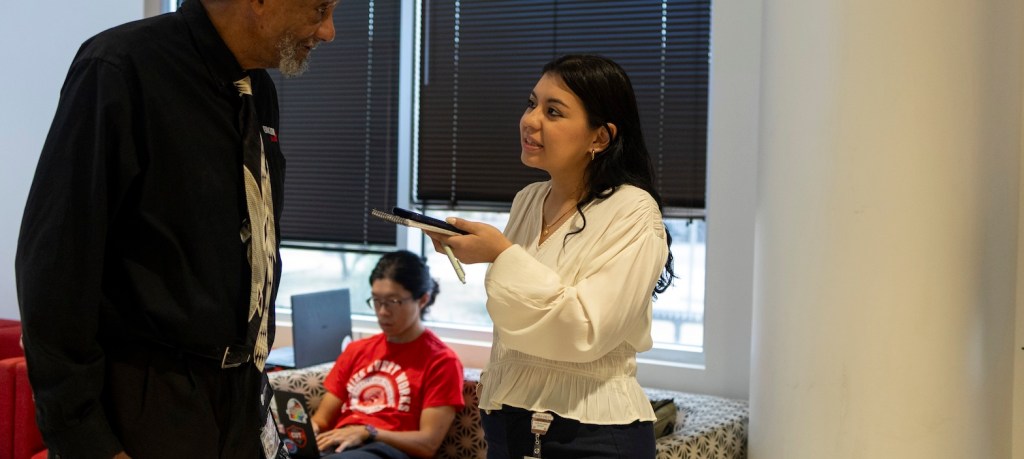
As the city weathers a changing landscape, Lila Valencia is tracking it all. Valencia, the City of Austin’s demographer, combs through census reports, vital statistics, economic data, housing prices, health trends and more to understand the city’s population. Her team’s work influences political and policy decisions.
Austin Current talked with Valencia about some of the pressing issues the city is facing. Her answers have been edited for clarity and length.
What is happening with Austin’s population?
For 13 consecutive years, there was very rapid and large population growth coming to the city. Austin is now growing much more slowly. It’s still growing, but at a fraction of the rate that it was growing, especially in the last decade. The region is still growing very, very rapidly. But in terms of population and housing and job growth in Austin proper, that’s happening at a slower pace than it is in the larger region.
Why is Austin’s population growth slowing down?
It’s something that is really nuanced. It really depends. If it’s affordability, it’s affecting people probably who would have moved here from other parts of Texas. If it’s the economy, it’s probably people who would have moved here to Austin from other states. If it’s just wanting a new house rather than an older, smaller house, they may prefer to move outside of Austin and stay within the region. Or, if they’re seeking more affordable housing or seeking to move from a rental space to a place they can own, they might look outside of Austin, but within the region.
What is the biggest demographic change over the last 10 years?
I guess it’s a slower population change, but I think it’s also paired with decreases in relative affordability. We always saw that there was more affluence in people who are moving to Austin from other states, relative to people who were already living here. As we started to attract more and more of those individuals, we started to see changes in our household income structure. Now our income distributions in Austin are heavily weighted to the higher income brackets, and those are the income brackets that have actually been growing the fastest. So people who are making over $150,000 or $200,000 a year, all those households have grown by like three times, whereas we’ve seen declines among people who make less than $25,000. We’ve seen a real stagnation in that middle income range of people who are making about $75,000 to $100,000. That really puts affordability pressures on the people who are already here. Unfortunately, what we see is that burden really falls on Austinites of color, in particular, Austinites who are African American and Austinites who are Hispanic.
What do you see as consequences of population decline?
A lot of people might think that population decline in Austin could be a good thing, right? It might make more resources available to people. It might get people off the roads and (produce) less traffic. But what it can mean to a city is a real loss in tax revenues. When we’re in a time of sort of austerity, where we’re not getting the typical inflows of federal money coming to local communities, when we’re not getting increased funding coming from the state, that means that the city has to provide a lot of services for its residents and that the bulk of the cost of those services falls on the on the city and the county. When you have fewer people in a place like Texas, where we rely on a lot of property taxes and sales taxes to fund a lot of these services, then we have a smaller pool of dollars to fund all of those programs. So it really can create a big impact, especially to communities that are in very, very severe need.
What is the defining demographic change for Austin in 2026?
We need to see what’s going to happen in terms of international migration given all of the changes in immigration policies. But also, I think it’s just migration in general, in terms of domestic migration (from other parts of the country.) Are we going to be able to attract back people who used to be moving from other states into Austin, or moving from other parts of the state into Austin? We’ve already seen drops in rents. We’ve started to see sort of a leveling in home prices and its home values. So it’s really understanding what kind of an impact those changes will have on affordability, because that is exactly what will affect some of those domestic migration numbers.