Brenda Jackson is a second-generation CapMetro bus driver. Her mom drove a bus. So did her aunt. She followed in their footsteps, maneuvering a hulking vehicle through Austin’s streets for 25 years.
“CapMetro has been a constant in my life,” Jackson said.
Two years ago, she started training new drivers. She teaches them how to operate 40- and 60-foot long buses while keeping passengers safe and responding to conflicts on board.
“Over the course of the last several years, it has gotten more strenuous out there,” said Jackson. “The operators are being spat on. They’re being cursed at. They’re having things thrown at them. They feel unsafe at times.”
Jackson said she’s truthful with trainees about the kinds of things they’ll encounter. But her biggest challenge is not having enough buses to train operators.
“We need bus availability to train. We are having issues with making sure that they have the proper amount of time so they are ready to go out there and perform their jobs more proficiently,” Jackson said.

That complaint is among several that’s brought CapMetro to the brink of its first strike in almost two decades. The last walkout, in 2008, lasted three days.
Jackson doesn’t work for CapMetro. She, like most of the agency’s bus drivers, is employed by Keolis, a Paris-based company that’s mostly owned by the French government’s railway company, SNCF.
In 2023, Keolis was awarded a $754 million contract to run the agency’s fixed-route bus service for five years. The deal was approved by CapMetro’s board of directors over the objections of union leaders, who warned that Keolis had a “history of anti-union conduct.”
Now, that labor strife has arrived in Austin.
“Wish they would have listened to us,” said Brent Payne, president of Amalgamated Transit Union Local 1091. ATU represents about 1,400 drivers and mechanics.
After months of negotiations with Keolis, union members voted 99.5% in late June to authorize a strike.
A walkout would shut down virtually all public bus service citywide, leaving thousands of people scrambling to get to work, school, medical appointments and grocery stores. People board CapMetro buses more than 60,000 times a day, on average.
For most of those CapMetro customers, taking the bus isn’t a choice. A 2023 survey found 85% of respondents had no household vehicle available for the trip they were taking.
A strike by Keolis workers wouldn’t affect CapMetro Access, a service for people with disabilities, or the on-demand shuttle known as Pickup. Those are run by MTM Transit. The Red Line commuter train would also be unaffected. It’s operated by Herzog.
In a statement, CapMetro said it had “established procedures and contingency plans” for service disruptions. But the agency wouldn’t explain what those plans were or whether it was taking steps to warn customers if their service could be disrupted.
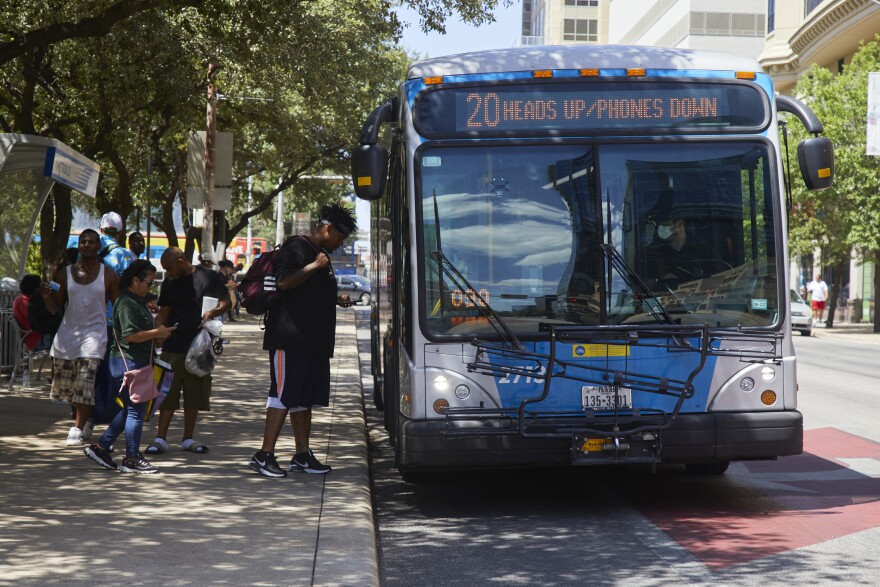
Many transit users are unaware of the looming walkout.
“This is the first time I’m hearing about this, so this actually kind of got me a little nervous,” Thomas Vargo told KUT News while waiting for a bus at the South Congress Transit Center. “It’s going to cause a lot of issues. They need to let people know.”
“That threatens my livelihood,” he said.
The union says its grievances around training relate directly to the quality of transit service: late buses, missing trips, high turnover and vehicles breaking down along their routes.
Matthew Smith has worked on buses in the CapMetro system for 23 years. He’s a Keolis maintenance technician and the union’s vice president for maintenance.
Smith said he’s never received a full training module on CapMetro’s electric buses. At one South Austin maintenance shop, he said, only three out of about 50 technicians regularly work on the electric vehicles.
“When that bus doesn’t show up — your bus is supposed to show up at noon at Fourth and Lavaca and it’s not there — you don’t know why it’s not there,” Smith said. “It’s because it probably broke down earlier in the route. We had to change it out or it never made it out on route.”
“We have better trained technicians, we have more reliable buses,” Smith said. “It goes hand in hand.”
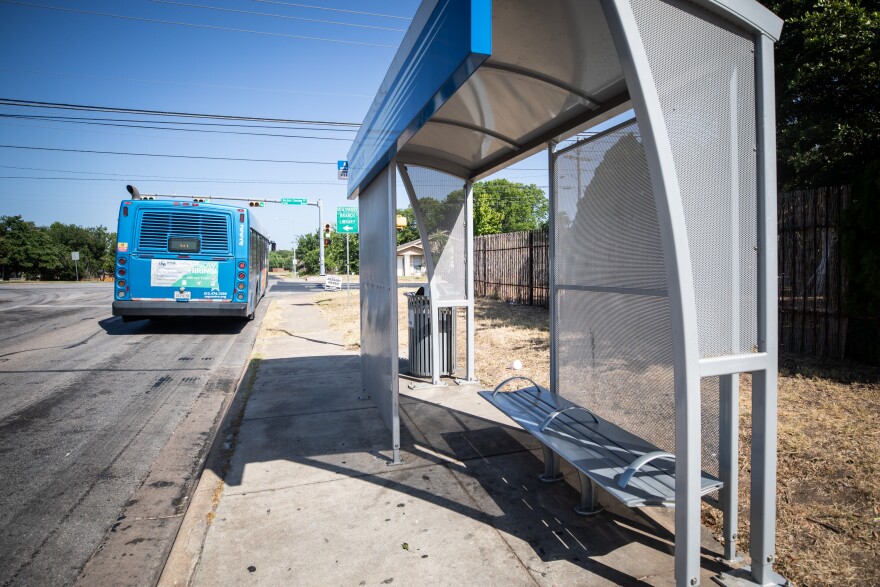
Drivers and mechanics are also asking for higher wages. And the two sides weren’t far apart: Payne said Keolis had offered a 12% raise over three years while the union was asking for 14%.
“About 75 to 80% of us, including myself, we can’t afford to live in Austin. And I’m born and raised in Austin,” said Darrell Sorrells, a 24-year veteran bus operator and vice president of the union. “I can’t even move back to my city I was born and raised in.”
During negotiations last week, Keolis offered a $1,000 bonus if workers ratify a contract, Payne said. The payment would be split into two installments, with half paid after ratification and the rest six months later.
Union negotiators haven’t endorsed the proposals. Payne described the bonuses as an effort to win over members without resolving the union’s broader concerns.
“They’re trying to throw a big enough carrot to divide membership,” he said.
In a statement, Keolis spokesperson Sally Stewart-McKinnie said the company “values the important role the union plays in representing our employees.”
“We continue to engage in good-faith bargaining with the union and remain committed to maintaining a collaborative and respectful relationship,” Stewart-McKinnie said.
The two sides have made progress elsewhere. Payne said they’ve tentatively agreed to extend benefits to operators who drive UT Shuttle routes. Details such as when those benefits would kick in are the subject of talks Tuesday.

CapMetro has tried to distance itself from the labor dispute. But its contract shows the transit agency reimburses Keolis for bus worker wages based on payroll records. Keolis’ administrative expenses are paid separately through a fixed monthly amount.
“They have a pass-through contract, so I’m not really dealing with Keolis economically,” Payne said. “Capital Metro determines the amount of money that Keolis pays us. “
But the contract also assigns collective bargaining and management of the workforce to Keolis. It doesn’t clearly say whether Keolis could agree to higher labor costs without additional approval or funding from CapMetro.
CapMetro didn’t answer KUT’s questions about whether it had set a budget limit or would need to approve the cost of a new union agreement.
In the statement provided to KUT News, Stewart-McKinnie said Keolis has “full authority to increase wages and benefits.”
“We believe we have offered fair wage increases and remain in active negotiations as we get closer to reaching an agreement that is in the best interest of all stakeholders,” Stewart-McKinnie said.
CapMetro and Keolis didn’t answer specific questions about the union’s claims concerning operator training, maintenance instruction, bus availability and breakdowns.
Negotiators are expected to return to the bargaining table Tuesday. Payne said the union’s negotiating team remains divided over the latest proposal. Any final offer would have to go to a vote by the 1,400 union members.