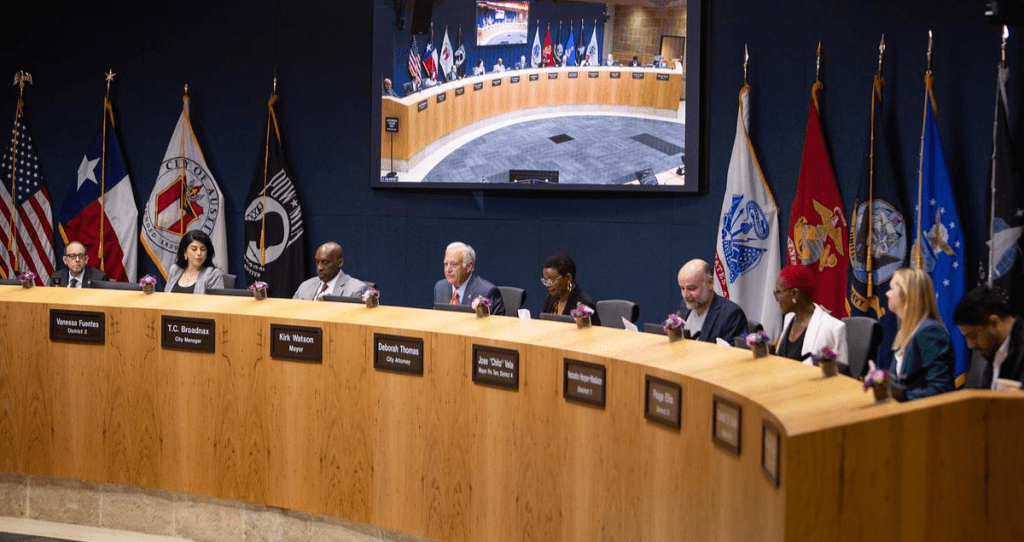
Austin nonprofits that provide housing, legal aid and other safety-net services are bracing for another round of potential city budget cuts, warning the reductions could leave vulnerable residents with fewer places to turn for help.
Inflation, stagnant sales tax growth, constrained property tax revenue and a looming budget deficit will force Austin City Council to make difficult choices this budget session. One of those is a proposed $16.8 million cut to social service contracts, which is setting off concerns among organizations that serve some of the city’s most vulnerable residents.
Many providers say they are entering the budget debate from an already weakened position after absorbing federal funding losses, softer philanthropic giving and a 10% reduction in city funding last year. With little public information so far about which programs could be affected, nonprofit leaders warn further cuts could mean fewer people housed, fewer legal services and fewer resources for residents in crisis.
A coalition of nonprofits has urged the city to treat the reductions as a last resort and fully consider how they would affect services for vulnerable residents. Several council members have publicly supported the coalition’s approach, but it remains unclear whether city leaders can avoid proposed cuts and help keep the safety net relatively intact.
“Social services contracts are really tough because they serve some really important needs; they meet the needs of our people day to day in this city,” Council Member Krista Laine said. “It’s really hard to see a suggestion of large cuts in that area.”
Family Eldercare CEO Aaron Alarcón said his nonprofit, which helps housing-insecure seniors find safe, affordable housing, has been hit by funding losses from nearly every level of donor since 2024.
“We have probably lost like $6 million,” he said. “We have had to downsize programs, we have had to close programs, and at the end of the day, the ones that are mostly impacted are the population that we serve.”
Like many social service providers contracted by the city, Family Eldercare saw its Austin funding allocation reduced by 10% in 2025, forcing a reduction in staff for the organization. Now, as city leaders prepare its next budget, Family Eldercare and dozens of other social service providers are bracing for the possibility of even deeper cuts.
“That means that we house fewer people, we serve fewer people. More people are at risk of becoming homeless,” Alarcón said. “More people are at risk of serious health problems because of isolation.”
Lisa Barden, immediate past chair of One Voice Central Texas, the coalition that asked City Council to consider a different approach to the cuts, said the proposed cuts come at a difficult time. Many nonprofits already face financial pressure from federal funding reductions and increased competition for philanthropic support from foundations and individual donors navigating their own economic uncertainty.
“You have all of these nonprofits now asking the same foundations that historically have served the local community for more money,” Barden said. “And those foundations are starting to cut back on the funding as well.”
How the city decides which organizations could see losses
Laine is one of five council members to back a request from One Voice Central Texas urging the city to treat social service cuts as a last resort, include nonprofits in the budget process and assess the consequences of any reductions before moving forward.
Still, with federal funding increasingly constrained, slowing sales tax growth and contractual obligations to Austin Police and Austin Fire departments already built into future budgets, Laine said maintaining current funding levels will be a challenge.
While the city has yet to publicly identify which social service contracts will be reduced, City Council approved an evaluation framework in February that would first prioritize legally-obligated services, then look for overlapping funding and opportunities for consolidation before evaluating contracts based on performance and equity considerations.
“It’s important to do a review of the impact they’re having,” Laine said, “and prioritize the greatest impacts per dollar spent as a way to decide what we’re continuing.”
Edna Yang, co-executive director of American Gateways, a nonprofit that provides immigration legal services with support from city funding, said last year’s 10% cut was difficult, and the news of a potential additional round of cuts was disappointing.
“It’s definitely impacted the services we provide, because we aren’t able to serve as many people as we would like under our city contracts,” she said. “We continue to struggle to meet the need that we see in our office. It’s always been a great need in general, but I think it’s even more so now, as people are scared.”
While Yang hopes the city continues funding services that support vulnerable communities, she said she understands the difficult decisions that lie ahead.
“I don’t envy the City Council and the job that they have to do,” Yang said. “But we’re hopeful that they will preserve some funding to protect those who are the most vulnerable amongst us.”